Our Technology
Energy is the biggest cost in greenhouse growing. We engineered it down.
Two proprietary systems, developed together and validated on a working prototype in British Columbia: Active Air Insulation™ for the building envelope, and Rotary Growing Towers for the growing system inside it. Both are at Technology Readiness Level 5 or above — validated as working prototypes, not yet commercially deployed at scale. Performance figures below are marked as either measured on the prototype or modelled design targets.
Active Air Insulation™
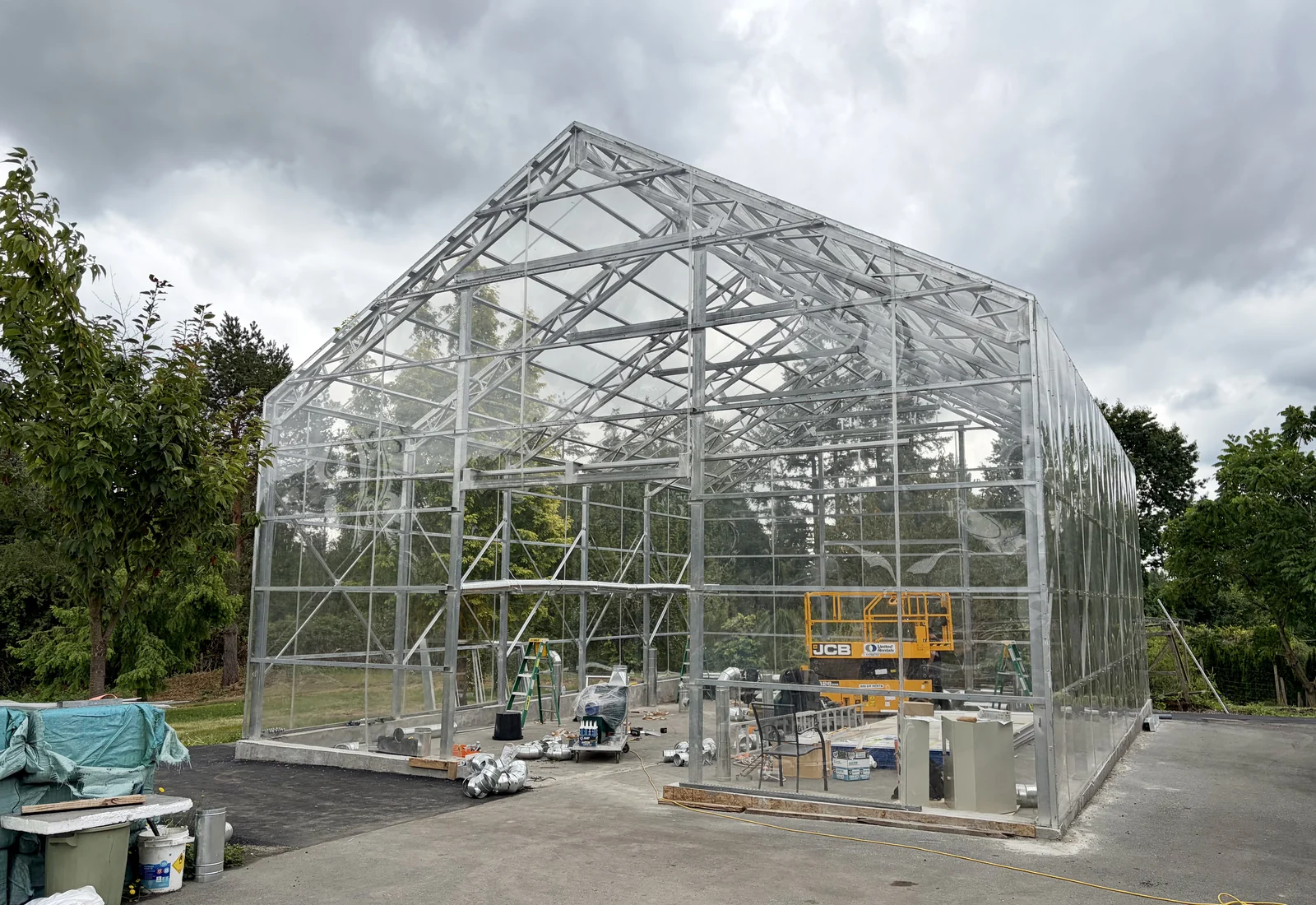
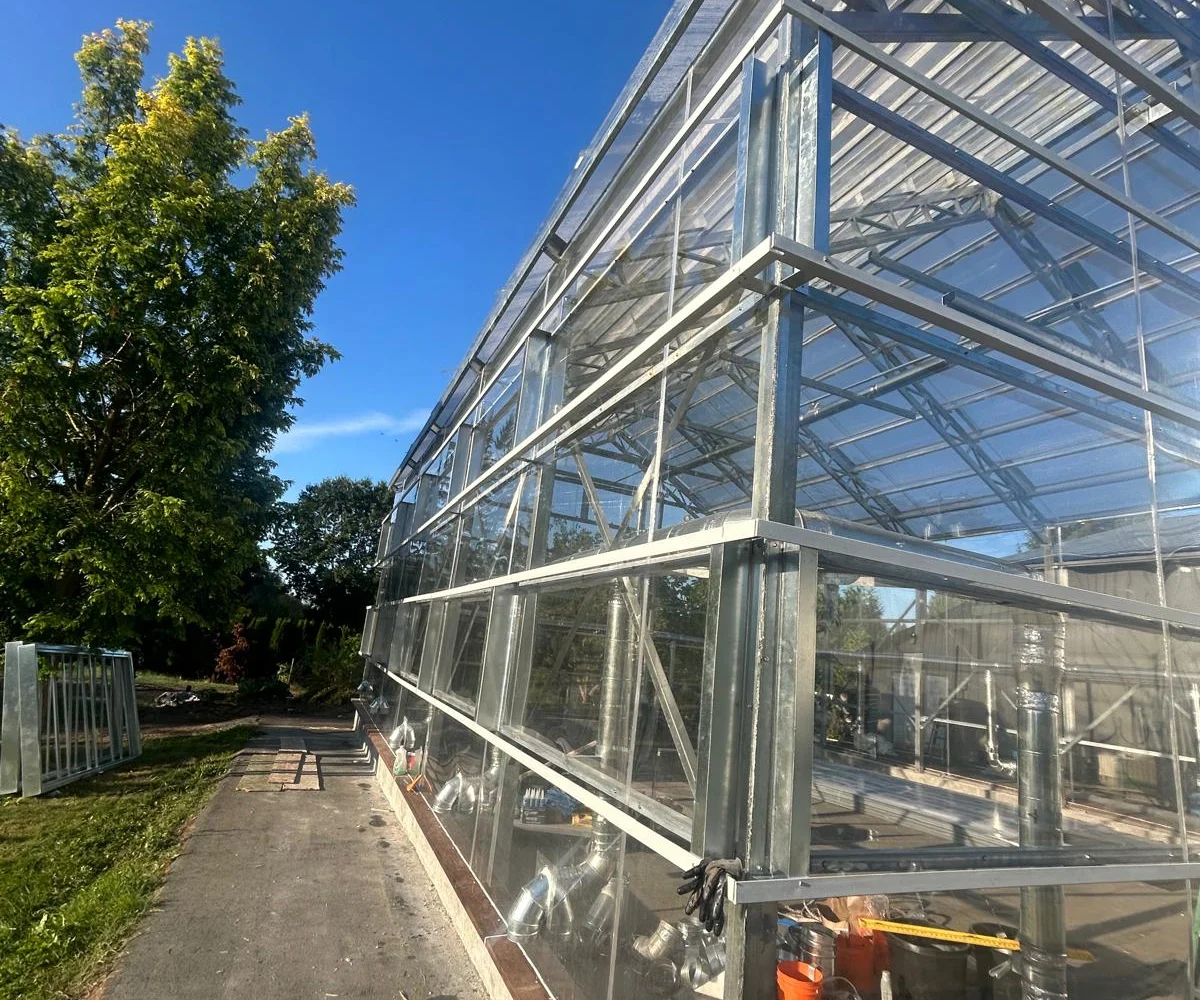
Traditional greenhouses trade light for insulation: every layer of glazing or thermal curtain that keeps heat in also keeps sunlight out. AAI breaks that trade-off. Two polycarbonate walls enclose a continuous air cavity, and a managed fan-and-duct system keeps that cavity pressurized — turning plain air into the insulation layer.
Because the insulating medium is air, the envelope stays light-transmissive, and the same air-handling system that maintains the cavity can distribute warmth evenly through calibrated flow valves — the farthest outlets open widest, the nearest open least, so conditions stay uniform across the structure.
Rotary Growing Towers
Vertical farming multiplies growing area, but static racks leave the lower levels starved for light — so most systems burn electricity on supplemental LEDs. The Rotary Growing Tower rotates instead: a carousel of eighteen trays carries every plant through the brightest zone of the greenhouse in turn, sharing natural sunlight across all 755 growing positions.
Each tower integrates precision nutrient dosing and plant-health monitoring, cutting fertigation inputs. And instead of single-use synthetic substrate — the vertical-farming industry's quiet waste problem — the system is designed around worm-casting growing media produced from composted food waste, closing the loop.
Proven Together · Pilot Program
A 3,000 sq ft AAI greenhouse running 18 rotary towers.
Our pilot facility in British Columbia integrates both systems end-to-end and runs model crops — lettuce, strawberry, and Thai basil — to gather real performance data on energy use, crop yield, and input efficiency. The pilot validates the technology, de-risks deployment for early adopters, and feeds the same data discipline we bring to advisory work.